Thomson Reuters: Tracing The True Origins Of Bad Behavior: New Ways To Predict Conduct Risk Exposure | Research | RiskTech Forum

THE leading website on Risk Technology news, research, opinion and media.

Sourced through Scoop.it from: risktech-forum.com

I haven’t read these materials yet. They just came across my desk. But I will read them. Wondering: are these materials that the internal and external auditors, and/or the board and audit committee should be considering as they relate to tone-at-the-top, culture, FCPA, fraud, etc.? Just wondering. Dave Tate, Esq. (San Francisco / California)

PCAOB Announces Settled Disciplinary Orders Against Seven Audit Firms and Seven Individuals for Engagement Quality Review and Other Violations

Sourced through Scoop.it from: pcaobus.org

The PCAOB really has become active and aggressive. Whereas we have GAAS and GAAP, the PCAOB is becoming the enforcer along with the SEC. An interesting dynamic. External auditors and audit committees should take note, in addition to the pending requirements that audit committees more actively evaluate and oversee the activities of the external auditor. Game changers.  Dave Tate, Esq. (San Francisco / California)

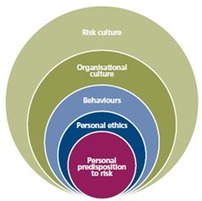
Risk culture

Sourced through Scoop.it from: www.theirm.org

More on risk culture from IRM, related to the below post about culture by EY. Dave Tate, Esq. (San Francisco / California).

EY – Checking culture: a new role for Internal Audit?

We believe organisations which are purpose-driven and address culture and values as a strategic issue will be more successful in the long term, manage risk better, and have a more positive impact on society.

Sourced through Scoop.it from: www.ey.com

We have to think about this one a bit. What is culture? As the article discusses, boards are already having problems getting a handle on culture oversight. How is internal audit going to do it? Internal audit doesn’t determine, design or implement culture. Internal audit can audit specific criteria or elements of the culture as requested by or discussed with the board, or the more likely the audit committee, and executive management. If internal audit is involved, then aren’t we really saying that at the board level culture oversight goes to the audit committee? And, what does the external auditor say about the culture? Is culture an element of COSO 2013 and/or part of the process for evaluating what testing to do during the audit and how reliable the accounting and reporting processes are? Interesting thoughts. As I am hearing more and more about culture, which of course does relate to unlawful activities and fraud, I believe this is yet another topic that is here to stay. Dave Tate, Esq. (San Francisco / California)

7 Steps to Better Board Meetings

From one CEO to another: How to get the most out of your board meetings. Keep your team engaged and interested with these tips.

Sourced through Scoop.it from: www.alleywatch.com

A good reminder. Dave Tate, Esq. (San Francisco)

Supply Chain Risk Assessment: Mining for Potential Threats – Deloitte Risk & Compliance – WSJ

Sourced through Scoop.it from: deloitte.wsj.com

A good basic discussion, including additional links. Supply chain risk assessment has become key in some situations not only for product supply and safety risks but also for possible unlawful activity.  Dave Tate, Esq. (San Francisco / California)

Commentary: Can California Find a Way Out of Its Pension Calamity? | PublicCEO

The latest reform effort wouldn’t solve the problem, but it at least would help keep it from getting worse. By Charles Chieppo. The longer you wait to solve a problem, the more painful the fix becomes. Californians are being reminded of that simple truth as their leaders attempt to grapple with the state’s snowballing public-pension …

Click on the following for the discussion: www.publicceo.com

I find this problem disgusting for several reasons. Not to be negative, but the problem, which has been known for a long number of years, (1) evidences that the majority, no not each of them, but the majority of legislators and elected officers as a whole where these problems exist cannot be trusted to perform their duties or represent the voting tax paying public, (2) evidences that there must be absolute transparency and disclosure in governmental accounting and reporting, (3) evidences that there must be an independent watchdog entity that has legal authority to take action and stop these problems early when they happen, and (4) evidences that government will not police itself.

It is my understanding that the new government accounting rules might soon eliminate the ability of governmental entities to hide these unfunded liability problems. These changes should have been made long ago. And I’ll only believe that it is corrected when I actually see it.

Even with transparency the problems continue to exist, for example, with social security and the federal disability fund.

Young people should be screaming about these problems that have been caused for them, elder people should be screaming about these problems that have been created for them, and people in the middle should be screaming about being somewhere in the middle of these problems.

The gross mismanagement of these problems has been extreme. Kind of funny, isn’t it, that the governmental entities enact statutes and regulations over business entities but then violate the public trust and fail to keep their own houses in order?  Sorry to rant a little, but these problems really bother me.  Take care. Onward.

Dave Tate, Esq. (San Francisco / California), http://directorofficernews.com, and working on Tate’s Excellent Audit Committee Guide, Click Here.
DOJ Provides “Best Practices” for Corporate Internal Investigations

Click on the following link for the discussion: corpgov.law.harvard.edu

Tate’s Excellent Audit Committee Guide, Plus Prior 2007 CEB Audit Committee Chapter

For audit committee members and directors, I have attached three links below, the first for my 2007 audit committee chapter for the California Continuing Education of the Bar, the second for the new audit committee guide that is a work in progress but already contains substantial materials, and the third to the cover and table of contents to Accounting and Its Legal Implications.

Using my blog posts, the 2007 audit committee chapter (which is now unpublished, CEB subsequently cancelled the entire Director and Officer binder), and the new audit committee guide you should get a good feel for new developments and guidance about audit committee member functions and responsibilities.

I also ask that you tell other people about this blog and the new audit committee guide.

1. Here is a link to my 2007 audit committee chapter for the California Continuing Education of the Bar (the chapter and the entire D&O publication has been cancelled for some time), CLICK HERE

2. The following is a link to the new audit committee guide which contains substantial materials although it is a work in progress, Tate’s Excellent Audit Committee Guide (July 31, 2015 version), Tate’s Excellent Audit Committee Guide 07312015 CLICK HERE

3. Cover and Table of Contents from Accounting and Its Legal Implications – I expect to scan and post this entire material shortly – although some is outdated, it is still a good read – originally published by Business One/Irwin Publishing, CLICK HERE

Thank you. Dave Tate, Esq. (San Francisco / California).

Controversy Surrounds SEC’s New Proposed Dodd-Frank Executive Compensation Clawback Rules | The D&O Diary

On July 1, 2015, a divided SEC voted 3-2 to propose rules directing the securities exchanges to adopt standards requiring listed companies to adopt policie

Click on the following link for the article: www.dandodiary.com

Another good read from Kevin LaCroix. Enjoy. Dave Tate, Esq.