Comments for Audit Committees about the PCAOB May 2015, Audit Committee Dialogue

This blog post includes a short video discussing the Public Company Accounting Oversight Board’s May 2015, Audit Committee Dialogue, and below the video you will find a link to the Audit Committee Dialogue. Please pass this blog post to everyone would be interested in these materials. Thank you. Dave Tate, Esq. (San Francisco and California).

Click on the following link for the PCAOB’s May 2015, Audit Committee Dialogue, Click Here.

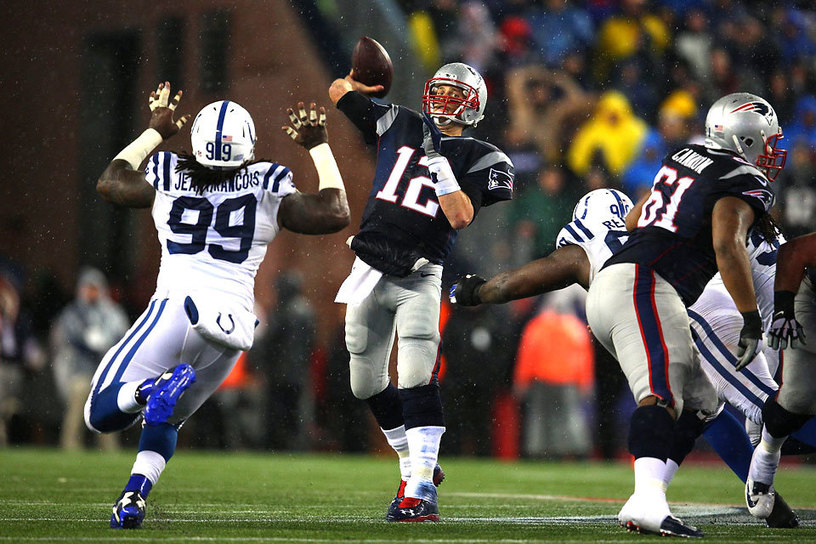
ROGER GOODELL A BAD IDEA TO HEAR BRADY “APPEAL”

The Brady “appeal” of the deflategate discipline really isn’t an appeal at all. In reality, it’s a motion for reconsideration back to Commissioner Goodell who has already approved or authorized the discipline that was suggested by NFL Executive President Troy Vincent.

And as you might guess, the likelihood of a judge reversing himself or herself in reconsideration is slim. As one judge said to me as he began a hearing on a motion for reconsideration: “So Mr. Tate, you’re here to tell me why I’m wrong, isn’t that right?” That judge did reverse himself but it was on a clear legal issue. The deflategate discipline is discretionary.

The NFL, Mr. Vincent and Mr. Goodell would be better to have the courage of their findings and have the appeal heard by an independent person, but in that circumstance they would need to agree to someone who is truly independent.

Messrs. Vincent and Goodell had the whole range of disciplines available to levy. The amount of the monetary fine was entirely flexible and discretionary. Whether to deny draft choices, and which one or ones, was entirely flexible and discretionary. Whether to suspend Brady and from what was entirely flexible and discretionary.

I doubt there would have been an appeal of monetary fines and draft pick penalties. A Brady four game suspension was likely to draw an appeal. Would a one or two game suspension have caused an appeal, perhaps, perhaps not? The NFL also might have been able to reach a mediated discipline agreement with a guarantee of no appeal by Brady.

Commissioner Goodell and the NFL have possibly subjected themselves to unnecessary risk and criticism.

At the current procedural posture, if on the supposed “appeal” Commissioner Goodell keeps the current discipline in place he is only confirming his own decision and isn’t independent.

If on appeal Commissioner Goodell reduces the severity of the discipline he essentially overrules himself and you could ask why he did not make that decision originally if he had previously understood and evaluated the Wells Report and Troy Vincent’s recommendations. Mr. Goodell also weakens Mr. Vincent or pulls the rug out from under him if he now publicly disagrees with and overrule Mr. Vincent’s recommendations.

The NFL and Commissioner Goodell are beginning to run the risk of looking biased, overbearing and unfair. Of course they might ultimately prevail and it is possible that the NFL and Mr. Goodell might be able to further damage or embarrass the Patriots and Brady. But it’s not good if this starts to look like imposing personal will and power.

Commissioner Goodell can still avoid further risk by referring the matter to a truly independent person to determine the appeal. If the discipline is then reduced on appeal Commissioner Goodell at least looks like he took the high road and the most independent and unbiased route.

More to follow.

Dave Tate, Esq. (San Francisco / California)

Justices make it easier to sue over 401(k) retirement plans

The Supreme Court ruled unanimously Monday in favor of participants in employee retirement plans who object to companies’ investment decisions that eat into retirement savings. The justices revived claims …

Click on the following link for the article: finance.yahoo.com

Tate’s comment: the employees had approximately 40 mutual funds to choose from. Perhaps this decision will prompt plans to provide employees with even more choices, in an effort to avoid these suits. Options and choices provided also don’t necessarily cause trustee, plan or company liability, but depending on the facts and evidence they might.  Enjoy. Dave Tate, Esq.

Social Security Risk Management – Congress and President Get a “D” and a NIST Tier 1 or 2 Rating

I’m going to rant a little in this “fun” post. Another week, another article about social security going broke, about tweaks to “fix” it by payroll tax increases, cutting benefits, taxing benefits, and/or raising the age to receive benefits. The following is another disheartening article about the doom of social security, about beginning in 2017 and thereafter new increases in the age to receive benefits, that even those reductions in benefits won’t “fix” social security, and that those increases originated way back in 1983.  For the article Click Here.  The point is, 1983 was over 30 years ago, and even before that it was known that social security was failing. The options are not good for anyone who has paid for social security for all of their working life, or even just for a significant number of years, for younger people (in their 20’s and 30’s) who are new or relatively new to the mandatory social security payment program, or for people who are somewhere in the middle (in their 40’s). I suspect that few people would voluntarily pay into such a system if they were allowed to vote on it today.

I don’t fault elected representatives who speak up and propose new fixes, because social security has to be fixed. It’s just that none of the options are good. I have already lost when you consider the amounts that my employers and I have paid into social security over my working life. And that was money year after year that could have been better used for many other things.

The President is the CEO of social security. Congress, the Senate and the House, are the Board of Directors. That means whomever is in office at the time, and in the case of the social security system, that means year after year, decade after decade.  Let me just say that if social security was a company the CEO and the Board would all be fired, or the program would have been terminated or really fixed or altered decades ago.

Have you seen the NIST – National Institute of Standards and Technology – Framework for Improving Critical Infrastructure Cybersecurity? The Framework originated in 2014, as a U.S. Government recognized outline for risk management steps in cybersecurity. The following is an August 31, 2014, blog post discussing the Framework, Click Here. You will note that the Framework includes a Tier rating system for how developed an entity’s risk management system is, Tier 1 being the worst and Tier 4 being the best. Below I have copied and pasted the four Tiers. Based on the NIST Tier descriptions, I rate social security system design and risk management at Tier 1, or perhaps a Tier 2 rating. You give it your rating. Social security is not even close to the Tier 4 rating that it should have given that payments into social security are forced on people, the astronomical amount of money that is withheld and paid into the system each pay period, and how people really are entirely dependent on the honesty and integrity of the system’s operation, management and risk management, including the honesty and integrity of the President as CEO and Congress as the Board. Below are the NIST Tiers. Enjoy.

Dave Tate, Esq. (San Francisco/California).

NIST Tiers:

Tier 1: Partial (first and lowest level of risk management practices) – Risk management practices are not formalized.  Risk is managed on an ad hoc and sometimes reactive manner. There is limited awareness of cybersecurity risk at the organizational level.  An organization may not have the processes in place to participate in coordination or collaboration with other entities.

Tier 2: Risk Informed (second level of risk management practices) – Risk management practices are approved by management but may not be established as organizational wide policy.  The organization knows its role in the larger ecosystem but has not formalized its capabilities to interact and share information externally.

Tier 3: Repeatable (third level of risk management practices) – The organization’s risk management practices are formally approved and expressed as policy. There is an organization-wide approach to manage cybersecurity risk. The organization understands its dependencies and partners and receives information from these partners that enables collaboration and risk-based management decisions within the organization in response to events.

Tier 4: Adaptive (forth and highest level of risk management practices) – The organization adapts its cybersecurity practices based on lessons learned and predictive indicators derived from previous and current cybersecurity activities. There is an organization-wide approach to managing cybersecurity risk that uses risk-informed policies, processes, and procedures to address potential cybersecurity events. Cybersecurity is part of the organizational culture and evolves from an awareness of previous activities, information share by other sources, and continuous awareness of activities on their systems and networks. The organization manages risk and actively shares information with partners to ensure that accurate, current information is being distributed and consumed to improve cybersecurity before a cybersecurity event occurs.

* * * * *

Audit Committee Self-Evaluation Form For Your Use

Audit committee self-evaluation form for your use, click on the following: Audit Committee Self-Evaluation Form David Tate Esq 10302014
Dave Tate, Esq. (San Francisco/California)

More On Brady Evidence And Discipline – Careful What You Wish For, And If You Are A Player, Don’t Email, Text Or Leave Messages

The following is a link to the NFL statement on the Patriot’s violations (from NFL.com) Click Here. In relevant part for the purpose of this blog post, the statement states:

“‘Here, there are several factors that merit strong consideration in assessing discipline. The first is the club’s prior record. In 2007 the club and several individuals were sanctioned for videotaping signals of opposing defensive coaches in violation of the Constitution and Bylaws. Under the Integrity of the Game Policy, this prior violation of competitive rules was properly considered in determining the discipline in this case. (Tate comment: why is a 2007 violation, especially on an entirely different issue, so important to this alleged 2015 violation 8 years later – that is like punishing the team twice for the 2007 violation, which also is a violation that is totally unrelated. The NFL would have been better advised to not include the 2007 violation in its current evaluation).

“Another important consideration identified in the Policy is ‘the extent to which the club and relevant individuals cooperated with the investigation.’ The Wells report identifies two significant failures in this respect. The first involves the refusal by the club’s attorneys to make Mr. McNally available for an additional interview, despite numerous requests by Mr. Wells and a cautionary note in writing of the club’s obligation to cooperate in the investigation. The second was the failure of Tom Brady to produce any electronic evidence (emails, texts, etc.), despite being offered extraordinary safeguards by the investigators to protect unrelated personal information. Although we do not hold the club directly responsible for Mr. Brady’s refusal to cooperate, it remains significant that the quarterback of the team failed to cooperate fully with the investigation.

“Finally, it is significant that key witnesses — Mr. Brady, Mr. Jastremski, and Mr. McNally — were not fully candid during the investigation.

“In accepting the findings of the report, we note that the report identified no evidence of wrongdoing or knowledge of wrongdoing on the part of any member of the coaching staff, including Head Coach Bill Belichick, or by any Patriots‘ staff member other than Mr. Jastremski and Mr. McNally, including head equipment manager Dave Schoenfeld. Similarly, the Wells report is clear that Patriots ownership and executives did not participate in any way in the misconduct, or have knowledge of the misconduct.

“Nonetheless, it remains a fundamental principle that the club is responsible for the actions of club employees. This principle has been applied to many prior cases. Thus, while no discipline should or will be imposed personally on any owner or executive at the Patriots, discipline is appropriately imposed on the club.”

From Troy Vincent’s letter to Tom Brady:

“With respect to your particular involvement, the report established that there is substantial and credible evidence to conclude you were at least generally aware of the actions of the Patriots‘ employees involved in the deflation of the footballs and that it was unlikely that their actions were done without your knowledge. Moreover, the report documents your failure to cooperate fully and candidly with the investigation, including by refusing to produce any relevant electronic evidence (emails, texts, etc.), despite being offered extraordinary safeguards by the investigators to protect unrelated personal information, and by providing testimony that the report concludes was not plausible and contradicted by other evidence.

“Your actions as set forth in the report clearly constitute conduct detrimental to the integrity of and public confidence in the game of professional football. The integrity of the game is of paramount importance to everyone in our league, and requires unshakable commitment to fairness and compliance with the playing rules. Each player, no matter how accomplished and otherwise respected, has an obligation to comply with the rules and must be held accountable for his actions when those rules are violated and the public’s confidence in the game is called into question.'”

———————————–

Tate comments.

However, as I have previously blogged on May 7, with respect to Tom Brady the Wells Report concluded:  “We nevertheless believe, based on the totality of the evidence, that it is more probable than not that Brady was at least generally aware of the inappropriate activities of McNally and Jastremski,” and doesn’t that set precedence for discipline of other players and teams in the future.  The statement against Brady is considerably less certain, and it contains two standards: “more probable than not” and “that Brady was at least generally aware of inappropriate activities.”  I understand the first standard.  I don’t see that the second standard has a definition, at least not at law, and I doubt under the Collective Bargaining Agreement. It appears that the standard stated is something like “it is more probable than not that it is more probable than not.” You can be certain that the Wells investigation was very detailed and that Wells thought long and hard about the wording that was used in the Wells Report – if he could have straightforward said that more probable than not Brady was involved in a directive that the footballs be deflated, the Report would have so stated.  Whereas some of the other teams or players might want Brady disciplined, I would suggest that considering precedence for allegations of wrongdoing by other players and teams in the future, they might want to reconsider their wishes in this situation and based on the standards being used.

I also note that the NFL statement on the Patriot’s violations does not appear to mirror the Wells Report wording on findings against Mr. Brady. Further, I would suggest that the vague and broad statement about Brady being “generally aware of the inappropriate activities of McNally and Jastremski” says nothing about when Mr. Brady had that knowledge, i.e., before, during or after the game, or what his alleged “general awareness” was.

Finally, I have previously noted that if Mr. Brady did not totally cooperate in the investigation, i.e., if he did not produce requested phone, text or email messages, under the Collective Bargaining Agreement there might be evidence to discipline on that particular violation. However, the NFL statement on the Patriot’s violations does not contain sufficient detail or information about which phone, text or email messages were requested, or the protections that the NFL offered to Mr. Brady. Didn’t the NFL also demand that other people produce phone, text or email messages that they received from Mr. Brady about the football inflation issue, and didn’t the NFL receive those communications?  Further, as it might be possible to claim lack of cooperation in most incidents, this could be viewed as a catch-all violation unless it is supported with substantial specific detail, evidence and prejudice to the NFL.

I would also suggest that in future incidents players will have more in mind not to leave phone messages, or to text or email as those actions could be used against them.  At least in this circumstance there is no evidence that phone messages, texts or emails were deleted after the issue or possible dispute arose – there is or can be a requirement to preserve evidence.

That’s all for now.

Dave Tate (San Francisco/California)

My other blog, http://californiaestatetrust.com, trust, estate, conservatorship and elder abuse litigation.


Important new IFAC paper on risk management

With help from Grant Purdy, IFAC has published an excellent Thought Paper on risk management. From Bolt-on to Built-in: Managing Risk as an Integral Part of Managing an Organization. This is one of…

Click on the following link for the discussion: normanmarks.wordpress.com

Tate comment: currently I’m just passing this along. Evaluation and comments will follow. Norman certainly indicates that this is an important paper by IFAC. How, if at all, might it impact, add to, or create a standard of care or process for risk management including auditor evaluation and/or audit committee or risk committee oversight? More to follow.  Dave Tate, Esq. (San Francisco / California)

Did Tom Brady Cheat? The NFL Has a Big Decision to Make and At Least Three Other Issues At Play

The long-awaited Ted Wells report is out. It’s heavy on circumstantial evidence that Patriots employees, at the behest of QB Tom Brady, purposefully deflated footballs before the AFC title game. But with no smoking gun, league commissioner Roger Goodell has to rule on one of the NFL’s all-time greats with his legacy on the line

Click on the following link for the article: mmqb.si.com

Tate comment: A well-written article and summary of the Wells Report. But aren’t there at least three other issues at play:

(1) The Report also indicates or suggests that the investigators wanted additional interviews which were denied – which might separately result in discipline;

(2) If it is just Goodell making this decision, with his reputation and ability to govern again at risk – it would be smarter for Goodell and the League to have a committee for these decisions; and

(3) if Brady is disciplined for “We nevertheless believe, based on the totality of the evidence, that it is more probable than not that Brady was at least generally aware of the inappropriate activities of McNally and Jastremski,” doesn’t that set precedence for discipline of other players and teams in the future.  The statement against Brady is considerably less certain, and it contains two standards: “more probable than not” and “that Brady was at least generally aware of inappropriate activities.”  I understand the first standard.  I don’t see that the second standard has a definition, at least not at law. It appears that the standard stated is something like “it is more probable than not that it is more probable than not.”  That standard might be sufficient under NFL rules. Nevertheless, whereas some of the other teams or players might want Brady disciplined, I would suggest that considering precedence for allegations of wrongdoing by other players and teams in the future, they might want to reconsider their wishes in this situation.

Dave Tate, Esq. (San Francisco / California)

My other blog: trust, estate, conservatorship and elder abuse litigation, http://californiaestatetrust.com

Know Your Questioner’s Purpose

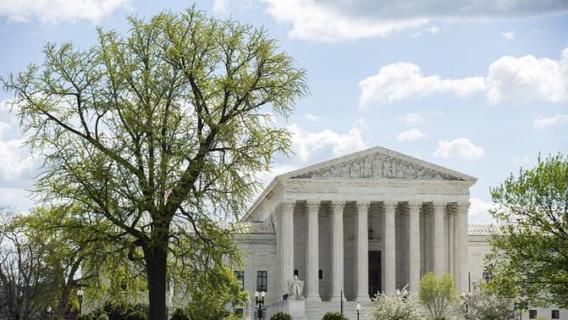
By Dr. Ken Broda-Bahm: The Supreme Court recently heard oral arguments on the question of marriage equality, and specifically whether state bans on same sex marriage are unconstitutional, and whether marriages that are legal in one state need to be recognized in another. As is typical, the focus is on Justice Kennedy as the traditional swing vote, and true to form, Justice Kennedy gave both sides something to ponder. For marriage equality opponents there was, “This definition [of marriage as bet

Click on the following link for the article: www.persuasivelitigator.com

Tate’s comments: Just an interesting discussion about responding to questions from judges. The discussion applies not just to judge questions. Dave Tate, Esq. (San Francisco / California)

My other blog, trust, estate, conservatorship and elder abuse litigation, and difficult administrations, http://californiaestatetrust.com

Lessons Learned from the Transition to COSO 2013

Protiviti has shared with us a useful Top 10 Lessons Learned from Implementing COSO 2013. I especially like this section: It is presumed that everyone understands that a top-down, risk-based approa…

Click on the following for the discussion: normanmarks.wordpress.com

A good COSO 2013 discussion from Norman and Protiviti.

Dave Tate, Esq. (San Francisco/California)

My other blog: trust, estate, conservatorship and elder abuse litigation, http://californiaestatetrust.com